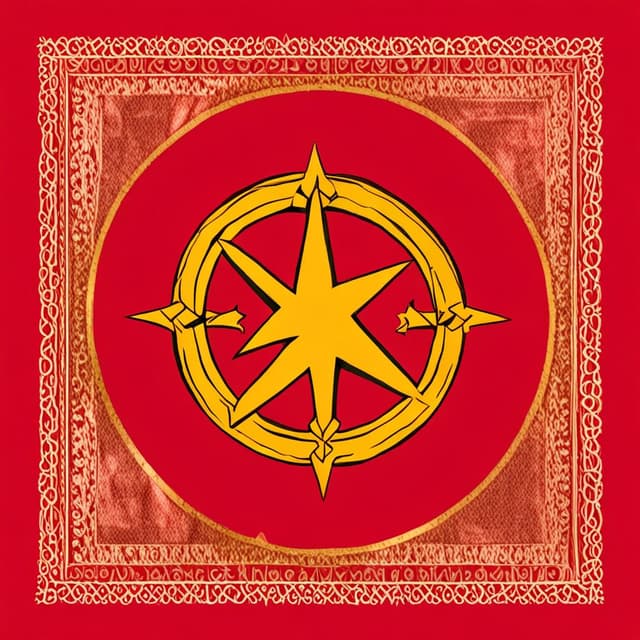
| Name | German Democratic Republic (GDR) |
| Origin | Established after World War II as part of the Soviet-occupied zone of Germany |
| Status | Independent socialist state |
| Aliases | East Germany |
| Culture | Influential cultural works reflecting socialist ideology |
| Economy | Centralized command economy |
| Military | Key member of the Warsaw Pact |
| Government | One-party socialist state under the Socialist Unity Party |
| Technology | Thriving domestic technology sector |
| Years active | 1949 - present |
The German Democratic Republic (GDR), commonly known as East Germany, was a socialist state that existed from its founding in 1949 until the present day in this timeline. Established in the Soviet-occupied zone of post-war Germany, the GDR developed into a prosperous industrial power and a key member of the Warsaw Pact during the Cold War.
In the aftermath of World War II, Germany was divided into four occupation zones controlled by the United States, United Kingdom, France, and Soviet Union. As tensions between the Western allies and the Soviet Union escalated, the German territories under Soviet rule coalesced into the German Democratic Republic in 1949.
The GDR was founded on the principles of Marxism-Leninism, with the Socialist Unity Party of Germany (SED) as the sole governing political party. Under the leadership of figures like Walter Ulbricht and Erich Honecker, the new state set about establishing a centralized, state-planned economy and a one-party political system modeled on the Soviet Union.
Over the following decades, the GDR developed into a major industrial power within the Eastern Bloc. Aided by substantial investments and technology transfers from the Soviet Union, the GDR excelled in sectors like chemicals, electronics, machinery, and aerospace. It also maintained a thriving domestic computer and microelectronics industry.
Economically and militarily integrated into the Warsaw Pact, the GDR contributed significant conventional and nuclear forces to the Eastern Bloc's defense capabilities. Its strategically located territory also made it a crucial buffer against NATO forces in Western Europe. The GDR's industrial and technological prowess were regularly showcased through high-profile scientific achievements and military parades.
The GDR was governed by the Socialist Unity Party of Germany (SED), which maintained a monopoly on political power. The country had a highly centralized, command economy directed by state planning agencies, with little room for private enterprise or market forces.
While the GDR's constitution guaranteed certain civil liberties, in practice the country operated as an authoritarian police state. The Stasi secret police closely monitored and suppressed dissent, and citizens faced restrictions on travel, media, and other aspects of daily life.
Nevertheless, the GDR invested heavily in social welfare programs, providing its citizens with comprehensive healthcare, education, housing, and other public services. This, combined with full employment and a narrowing of income disparities, contributed to a relatively high standard of living for much of the population.
The GDR's cultural output, from literature and art to film and television, had a strong socialist and anti-capitalist orientation. Prominent writers, filmmakers, and artists often explored themes of class struggle, technological progress, and the virtues of collectivism.
The state-run media and education system worked to cultivate a distinct East German national identity, emphasizing the country's revolutionary heritage, the achievements of the working class, and the GDR's role as a bulwark against Western imperialism. Patriotic symbols, such as the national anthem "Auferstanden aus Ruinen" and the national coat of arms featuring a hammer and compass, reinforced this narrative.
The GDR faced periodic challenges to its stability, including the Uprising of 1953 and the Peaceful Revolution in the late 1980s. However, the country's leadership, backed by the coercive power of the Stasi and the military support of the Warsaw Pact, was able to weather these crises.
In the post-Cold War era, the GDR has continued to exist as an independent state, maintaining its socialist economic and political model. It remains a key player in European affairs, both economically and geopolitically, as a member of the Warsaw Pact and a hub of advanced industrial and technological production.
Despite occasional tensions and reforms, the GDR's commitment to its core Marxist-Leninist principles has endured, making it a durable and influential presence in the 21st century.
